Saturday, June 23, 2012


Review: Scalp Mountain by Julia Robb

Title: Scalp Mountain
Author: Julia Robb
Format: Ebook
Publisher: Self-published
Publish Date: February 19, 2012
Source: I received a copy from the author. This did not affect my review.


Why You're Reading This Book:
  • You're a historical fiction fan.
What's the Story?:

From Goodreads.com: "It’s 1876 at Scalp Mountain and Colum McNeal is fleeing gunmen sent by his Irish-immigrant father. Colum pioneers a Texas ranch, a home which means everything to him, but struggles to stay there: José Ortero, a Jacarilla Apache, seeks revenge for the son Colum unwittingly killed.
 

At the same time, an old acquaintance, Mason Lohman, obsessively stalks Colum through the border country, planning to take his life. Colum has inspired the unthinkable in Lohman. In a time and place where a man’s sexuality must stand unchallenged, Colum has ignited Lohman’s desire.
Other characters include Texas Ranger William Henry, who takes Colum’s part against his father while wrestling with his own demons. Henry’s family was murdered by Comanches and he regrets the revenge he took; and Clementine Weaver, who defies frontier prejudice by adopting an Indian baby, must choose between Colum and her husband.
 

Scalp Mountain is based on the Southern Plains’ Indian Wars.
 

Those wars were morally complex, and the novel attempts to reflect those profound, tragic and murderous complications.
 

Everyone was right, everyone was wrong, everyone got hurt."

My Two Cents:

I love historical fiction but I can get tired of reading about the same places, people and events over and over again. I love when an author can take me to a new place and time. Julia Robb does just that with Scalp Mountain. The author takes us to late 1800s Texas and the surrounding areas. At that point in time, the middle part of the country was still wild. The white people who ventured out west from the East Coast were often the only people of their race for a long time. To say that there was tension between these white settlers and the Native Americans, who had been forced on to reservations by then, would be a complete understatement.

The book is really about the struggle between the white settlers and the Native Americans. I thought that Robb did a good job of making the reader feel the plight of both the white settlers and the Native Americans although the books mostly focuses on the white settlers and is therefore more sympathetic towards them.

I really liked the descriptions of life out on the frontier. There was so much going on, especially for poor Colum, one of the main characters in the book. His father sent a gunman after him after he thinks that Colum killed his own brother. Colum is also trying to flee the Native Americans. He leads an exciting life to say the least.

I also really liked Clementine's story. She is definitely a woman before her time. She's strong and resourceful and she doesn't worry too, too much about what other people say about her. She adopts a Native American child after he's found. This doesn't make her too popular with the other women around but she becomes completely dedicated to her son, James.

This is a good story about the not so pretty history of our country told in such a way that it will grab you and hold on to you until the very last page.


Thursday, June 21, 2012

Scalp Mountain review postponed until Saturday, June 23, at Venturegalleries.com. It will be a good one.

Wednesday, June 20, 2012

Look for the next "Scalp Mountain" review on June 21. See you there!

Wednesday, May 30, 2012

SCALP MOUNTAIN Review and Interview

By Ron Scheer
buddiesinthesaddle@blogspot.com


 This is a fine novel. If you drew a line between Lonesome Dove and All the Pretty Horses, you would find Scalp Mountainsomewhere along the way. Robb immerses you in a West that is saturated in violence and the sorrows that violence brings with it.

It is the 1870s in the border country along the Rio Grande and points west. The killing fields of the Civil War are a fresh memory, and the atrocities of the Indian Wars continue to haunt the days and nights of both whites and Apaches.

Plot. In the midst of all this, a young man, Colum McNeal, is pursued by killers. A fugitive, he has blood on his hands, having done the unspeakable, killing his own brother. He believes his pursuers are gunmen hired by his enraged father. One of them, Lohman, is a man he’s known for many years, who has mysterious reasons of his own for stalking him.

He has also been picked out for revenge by an Apache, Jose Otero, whose family has been killed by whites and his infant son taken. A fierce warrior, he thinks of himself as already dead. He is driven only by his last desire to break the hearts of those who have broken his own and his people’s spirits.

Ocotillo, Big Bend National Park, Texas
A well-meaning ranger, Captain Henry, complicates matters by saving the life of Otero’s infant son and giving him to the care of a childless couple, Michael and Clementine. When Otero abducts Clementine and his son, there follows a long chase into the Big Bend country, an arid and unpopulated desert region along the Mexican border.

Among this party of soldiers and civilians, lives are lost in firefights with Otero’s men. When Clementine is found, most of the surviviors turn back, leaving Colum and a handful of others to follow Otero. Among them are the generous and fatherly Captain Henry and the mysterious Lohman.

There are still many treacherous miles to cover and several turns of plot before the story reaches its end, steeped in more bloodshed and sorrows. Robb leaves a reader with this feeling you get sometimes from both McMurtry and McCarthy, that the West was won at a terrible cost, whether men or women, Indian or white, living or dead.

Heroism. The novel is compelling for the way it takes the elements of the traditional western and casts them in an unaccustomed light. Elmer Kelton would do something similar in his Texas Ranger trilogy, Lone Star Rising, but his focus is on the heroism found on both sides of the Indian Wars.

Rio Grande, Big Bend National Park, Texas
Robb looks past that, not to deny it, but to shake us to the core with the uncertainties and anxieties of living in those times. Also, to strip away some of the myth that obscures history. She humanizes the heroism, and doing so bonds us to her characters as people with hopes, fears, and mixed motives little different from our own.

Some might call her central character, Colum, an anti-hero. He harks back to Cain, the brother-murdering son of Adam and Eve. Alone in the world, he is haunted by guilt, regrets, and painful memories. A sexual urgency in him draws him powerfully to the wife of his friend Michael. We admire him finally for the courage to face whatever threatens to kill him, including his unforgiving father.

Wrapping up. As I began by saying, this is a fine novel. I rarely say about a novel that it was hard to put down. That’s no reflection on good writing; I’m just easily distracted. But there were times when this one had me and refused to let go. For anyone who likes their westerns well grounded in history, this is one you don’t want to miss.

Julia Robb describes herself as a former journalist and magazine writer, who grew up in small-town Texas. She now lives in Marshall, Texas, where she works as a free-lance editor. You can read about her life growing up in small-town Texas at her blog. Scalp Mountain is currently available as an ebook for the kindle.

Julia Robb
Interview

Julia Robb has generously agreed to talk here today about writing and the writing ofScalp Mountain, so I'm turning the rest of this page over to her.

Fellow Texas writer Larry McMurtry has said, “Backward is just not a natural direction for Americans to look—historical ignorance remains a national characteristic.” Would you share that opinion?
Absolutely. Americans do not know or understand their history, and they have been brainwashed to believe in good guys and bad guys: Somebody has to be right. Liberal thinkers enjoy exposing notables as imperfect and more traditional thinkers believe in the myth of the heroic.

The truth is in between. From the beginning of the world, humans have been imperfect and complicated, thus our history has been imperfect and complicated. Thomas Jefferson was an impressive person and one who, with many others, risked everything to fight the English, but he was also human and probably had a slave mistress. Was he a bad man or a good man? Do we judge him by 21st Century standards, or by the standards of his time?

Much of this ignorance stems from America’s eagerness for the future, which produces a reluctance to look back even one day. It’s easier to put things in categories and go on. Mass media also trains people to want pablum. On the other hand, Americans (and probably most of the world) have always preferred the cheap seats.

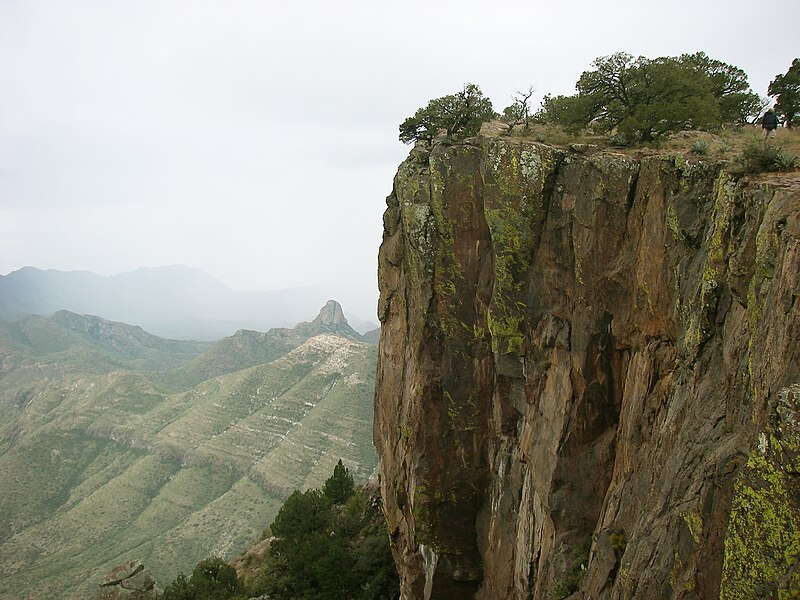
Big Bend National Park, Texas
How do you define the term “traditional western,” and isScalp Mountain an example of one?
I tried to write Scalp Mountain as a historical novel, meaning a book which helps explain events during a specific time period, and one which embodies themes. Many novels which appear to be Westerns are not; for instance, Tom Lea’s very fine The Wonderful Country.

I urge anyone interested in the frontier, Texas, Mexico and/or art, to read this book (Lea was a visual artist as well as a writer and he illustratedWonderful Country). Lea never got the recognition he deserved for The Wonderful Country.

I guess I don’t know what a traditional Western is. I just take books for what they are.

To what extent did growing up and living in Texas help or hinder the writing of this novel?
I couldn’t have written Scalp Mountain without growing up in Texas, with the distances, the sky spreading to the end of the world. It shaped my spirit, although I’m not sure what shape it took. And Texans are not like other Americans and that has to do with their history; particularly the long, barbaric Comanche wars. It shaped the culture. (Read Empire of the Summer Moon, by S.C. Gwynne, to understand this).

I was exiled in Maryland for fifteen years, working, and I can tell you Maryland is wonderful, but its people were shaped by a whole different ethos.

In reading western fiction, can you tell those who write of Texas from a lifetime of first-hand experience and those who don’t?
I’m not sure, I haven’t read that many historical novels or westerns about Texas. There’s really not a whole lot of them. I can sure tell the late Tom Lea grew up in Texas. His tone, meaning the feel of the place, is perfect.

I’ve found women and men write different kinds of books about Texas, and/or the American West. Women writers tend to be sloppily sentimental about Indians and their culture (by the way, I’ve asked many Indians what they want to be called, Native American, etc. and they always told me they are comfortable with “Indian”).

Men tend to be more rigorous, although not always. One Texas writer wrote a novel from the Comanches’ point of view and he didn’t even mention Comanche raped their women captives to death, or kept them in sexual slavery. This kind of stuff is important because it’s truth.

Santa Elena Canyon, Rio Grande, Big Bend National Park
Did any of the characters surprise you as they took shape in the writing?
Henry surprised me. He turned out to be such a character; a man willing to do what he had to do, but loving in his attitudes, poetic (although a terrible poet) and whimsical. I missed him so much after, well, you know...

How closely does the finished story compare to the way you originally conceived it?
It’s pretty much the way I thought it out. The characters grew a little. And the research produced complete surprises. It was a revelation to find that everybody on the frontier scalped everybody else; white men scalped other white men, whites scalped Indians, Indians scalped Indians, Indians scalped whites. In one instance, some Indian even scalped a white man’s dog. That’s true.

Talk about how you decided on the novel’s title.
This story is about the Indian Wars. I wanted to tell a balanced story and that meant demonstrating that both sides were right, both were wrong and everybody got hurt. The wholesale scalping was the perfect symbol for this. Do you remember the scene where Henry and Colum were riding past “Scalp Mountain,” and Colum told Henry why it was given that name?

Pima caught two Apache and crucified them on the mountain. They used real crosses and tied the Apache to the crosses with green rawhide, then left them to die in the sun. That really happened. I went a step further, to illustrate the book’s theme, by having the Pima decorate the crosses with scalps; white, Indian, Mexican.

To what extent was writing this novel influenced by western movies and TV?
I think all American writers have been influenced by film. We’ve had movies now more than one hundred years and it has trained everyone to see cinemagraphically. I know that’s the way I see, when I’m writing.

Big Bend National Park, Texas
Talk a bit about the creative decisions that went into the cover of the novel.
I looked online for Texas landscape painters and found the wonderful David Forks. When I looked through his online gallery, I found the book cover. It seemed like a perfect illustration for the book, a somber mountain in West Texas.

I’m grateful to David for letting me use his painting and for designing the book cover for me. I urge everyone to go to his online gallery and look at his work. His website is at fineartstudioonline.com, or write him at davidforks.com.

Do women writers bring something to the writing of western fiction that male writers generally don’t?
No.

How would you hope to influence other western writers?
I don’t know how to answer that. We just all do what we do. I guess I do hope writers would delve deeper into events and produce books which are more complex and nuanced about cultures and people. Some idiot, writing on Facebook, recently declared that Custer was a psychopath. Total ignorance. Custer was not a psychopath.

What can readers expect from you next?
I’m not sure. I’ve written sixty pages of a novel I’m not happy with and it’s in a drawer. I have another finished novel, about Texas in the 1960s, about the power struggle between Anglos and Hispanics, but nobody will publish it. Agents say it’s not a genre novel, it isn’t mystery, it isn’t thriller, it isn’t fantasy, it isn’t a Western, etc., so we can’t sell it. I’m almost finished with a movie script based on Scalp Mountain. No telling what will happen to it.

Anything you’d like to talk about that we didn’t cover?
Yes, I believe life is tragic, but tragedy can produce redemption. Art, at its best, produces transcendence. And that’s what I’ve tried to do with this book.

Thanks, Julia. Every success.

Wednesday, April 18, 2012


                                   THE REAL DEAL

     When I was growing up on the Southern Great Plains, in Hamlin, Texas, I had three places to find books.
     A school classroom contained three shelves, my father's church had a closet-sized room with five shelves (I couldn't reach high enough to see the titles without standing on a chair) and an elderly lady filled one room of her tiny, wood-framed house with donated volumes. Most of the library books dated from the jazz age.
    It didn't take me long to ransack the classroom collection and the town library leaned heavily on Ralph Waldo Emerson and Henry David Thoreau: Good writers, but I was too young to appreciate Emerson's advise for living or Thoreau's musings on nature.
     I did discover "Gone With The Wind," and read it ten times, splattering the pages with tears each time Rhett left Scarlett. 
     Rhett don't go, don't go!
     The church library, which smelled like paper mold and dust, produced "Cherry Ames, Student Nurse" and a dozen others in the Ames series, but most of the time I pulled a promising tome and found it was "Annals of the Northwest Texas Conference, Methodist Church, 1908."
     That was agony.
     When dad was transferred to a church in Midland, Texas, my book hunger was better fed. The Midland library was not bad, especially for a cow town plopped in the middle of nowhere.
     But finding good books has always been a struggle for me.
    Family sagas, pooh, romance, gag, fantasy, oh please (will someone produce a new plot rather than the same old formula).
    Give me big characters carrying big themes, written well; a rare combination.
    Historical fiction is my favorite, but guess what?
    A lot of historical novelists bend the truth.
    Imagine my delight when I discovered historical memoir, first-hand accounts of actual events. 
     First I read books like "Eyewitness To History," a compilation of short accounts, such as "Dinner With Attila the Hun," by Pricus and "The Murder of Thomas Becket," by Edward Grim.
     Grim actually saw knights, sent by England's Henry II, splatter Becket's brains on the Canterbury Cathedral floor.
     At some point, I got interested in the American Indian Wars and that opened up a treasure chest of reading.
     And it taught me something.
     No one race is all good, or all bad.
     On the American frontier, for every wrong one race committed, the other did the same thing.
    Reading about frontier history has often made me want to pull my hair out; so much hurt, so much misunderstanding, so much savagery.
    My favorite first-hand memoir is "On The Border With Crook," by Captain John Bourke, Third U.S. Cavalry, published 1891.
     Bourke kept journals when he was stationed in Arizona Territory and in the Dakotas, and his memoir is a detailed description of everything he saw.
    I loved his account of a man dying from wounds after an encounter with Apaches--"first exhilarated and then excited, petulant and despondent..he manifested a strange aversion to being put in the same vehicle with a dead man."
     I reproduced those stages of death in my novel, "Scalp Mountain."
     Then there's the man who crawled away from the scene of an Apache attack. The man wrote his name on a rock, with his own blood, immediately before he was devoured by a panther.
     Bourke became sympathetic to the Apache and didn't mind writing his opinions.
     As a result, he was never promoted beyond the rank of captain, which was a source of great bitterness to him.
    Well, to everyone who wrote a first-hand account and gave me something else to read, I send my thanks, and hope wherever you are, you are resting well.


    Julia can be reached at juliarobbmar@aol.com


Sunday, March 18, 2012


RIDING THE HIGH COUNTRY
by Julia Robb

 The first time I saw Colum McNeal, he was standing on a hill in the Davis Mountains, in far West Texas, about 120 miles from the Mexican border.
    I was sitting in my living room, here in Marshall, drinking coffee.
     You might call it a waking dream.
     At first, I didn’t know his name-that came later-but I saw his red hair burning in the sun and had to know why he swept the valley below with restless green eyes.
     That’s how all my novels begin, with a vision of somebody I have never seen, doing something I don’t understand.
     Then the questions begin and the questions create the story.
     It was a lot easier to understand where Colum was, physically, than what he was doing because I know that part of Texas.
    The Davis Mountains are not really mountains, but a series of green hills.
     The highest peaks rise 8,300-odd feet, squatty in comparison to the Rockies.
     It’s strange country. Lush grama grass fattens cattle, but it grows around piles of rocks and surrounds desert plants like prickleypear and ocotillo.
     Pinyon and ponderosa pine cover the upper slopes.
     I had a good time writing Colum’s story—eventually titled “Scalp Mountain” (now on sale as an ebook, at Amazon).
     Readers ask me why I wrote this historical novel and I tell them about seeing Colum.
     My answer is a little misleading.
     I wrote “Scalp Mountain” because the frontier and its moral complications grip me like a head-on train wreck.
     There’s more.
     I’m not comfortable with our noisy, entertainment-centered, celebrity-driven, American culture.
     Writing is a form of withdrawal.
     But, really, the 19th Century was a lot tougher than the 21st.
     Dead children were a life-long emotional burden for families, especially mothers.
     One out of five children died before they were five years old; almost all families lost at least one  baby, or child, and some lost every child they had.
     Abraham Lincoln and his wife Mary lost two children before the president was shot-Eddie, 3, and Willie, 13.
     Mary’s grief further unbalanced her already precarious emotions. Mr. Lincoln closed himself in Willie’s room once a week and stayed for hours.
     Tad died at 18, several years after the president was assassinated.
     It wasn’t just children.
     Average life expectancy in the 19th Century was about 48-years-old (and a lot less for young women, who often died in childbirth).
     Disease took its toll, but men and women were also maimed in accidents; everything from runaway buggies to mules expressing their displeasure with a kick to the nearest head.
      Cutting wood was a daily chore and if an ax slipped and cut a leg or foot, the victim often died from blood poisoning.
      Labor saving devises (like washing machines and running water) did not exist.
     Women’s washdays included three tubs of water they had to haul from the well or the creek, they had to boil the clothes, slap them around the soapy tub with sticks and hang them on a line.
     It took all day.
     Physical labor; aching backs.
      Toothache tortured almost everybody. Cavities relentlessly decayed most peoples’ teeth and pain meds (even aspirin) were a distant dream.
     Although some assume the frontier was romantic, the opposite is true.
     Tens of thousands of Americans, red and white, died in the Indian Wars, which raged for 400 years, from Jamestown through Wounded Knee.
     Farms, ranches, mail carriers, stagecoaches, soldiers, surveyors, even whole settlements, were attacked, tortured and butchered.
     Women and kids were kidnapped and never seen again.
     U.S. Cavalry surprised sleeping Indian villages, especially on the plains and especially in winter. Then troopers destroyed the stored food, burned the lodges and buffalo robes, shot the horses.
     Tribal people died of starvation. Babies froze to death in their mothers’ arms.
     White women captives were raped to death, or brutalized beyond what I want to describe in this space.
     Still, the high country of my imagination lures me.
     And I don’t really have to live there, do I?
     The past is safe because it’s over.
     God bless all readers, whether they read my novel or somebody else’s book.
     You give writers an excuse to dream.